
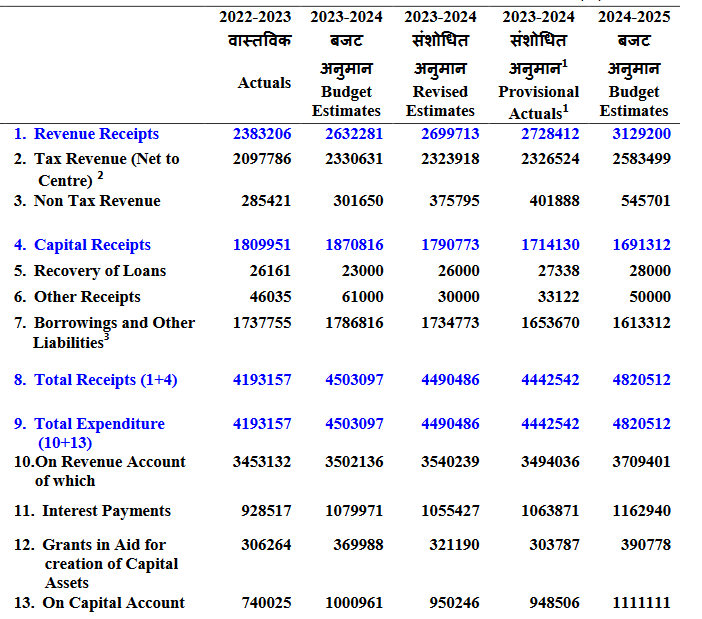
Most major parties promise to provide ‘freebies’ before elections, this can be in the form of small amounts of cash transfers, free food grain for the poor etc. There are many articles written by neoliberal commentators on how such transfers are fiscally reckless. This can be true to an extent for sub-sovereign Governments like state and municipal Governments. However, it does not apply for the sovereign currency issuing Government that is the Central Government.
State Governments for example have to borrow and sometimes pay high interest rates on the debt that they issue to fund spending. In the recent years, due to increased centralization of indirect taxes under GST, state Governments have lost their fiscal space, forcing them into increased indebtedness. This is only exacerbated by the unwillingness of the sovereign Central Government to provide transfers to states.
This becomes concerning because during elections (e.g. Delhi which just had elections this week), political parties make such promises which can be monetarily ‘costly’ and would eat into tax revenues. I had written about this in my previous blog.
This is not to say I don’t believe such schemes are ‘bad’, I believe that free public transportation with distance quotas should be universal. But since the state Governments require ticket revenues to offset the cost of running the service, it will likely have to be met by cuts in other areas. For the Central Government, tickets should be seen as a way to manage demand for public transportation than as a source of revenue. Sovereign currency issuing Governments do not require revenue to spend.
The mainstream economists think there are three ways to fund Government spending; taxes, bond-issuance (borrowing) or ‘printing money’. The last two are discouraged because it supposedly causes inflation.
But this raises a question, if you need tax revenues to fund Government spending, then where does money even come from? The reality is that the Central Government, through RBI, spends first and taxes later. Spending must come before taxing, taxing takes back money that has already been spent.
Thus, the arguments about ‘fiscal sustainability’ of ‘freebies’ is completely wrong for the Central Government. In fact, the vast unemployment, underemployment and widespread poverty means that the Central Government should be spending more. It also means that the Central Government can guarantee debt issued by the State Government which would reduce the interest rates they have to pay close to that of Central Government bonds.
The actual arguments against ‘freebies’ are not about ‘fiscal sustainability’ but that such ‘freebies’ are not provided as rights, and many times such ‘freebies’ are quite limited. ‘Right to Employment’ and ‘Right to Basic Income’ for anyone who isn’t able to work should be added to the constitution. A basic job must be an option for anyone who can’t find a job, the job must pay the minimum wage and offer work on 8 hours a day, 5 days a week.
‘Freebies’ aren’t rights, it can be taken away by the Government at any moment. In fact, the people are supposed to feel ‘grateful’ that the Government is providing for them. ‘Right to Public Transportation’ should be the law, rather than one which can be taken away if people don’t vote for a specific party.
That’s all.