
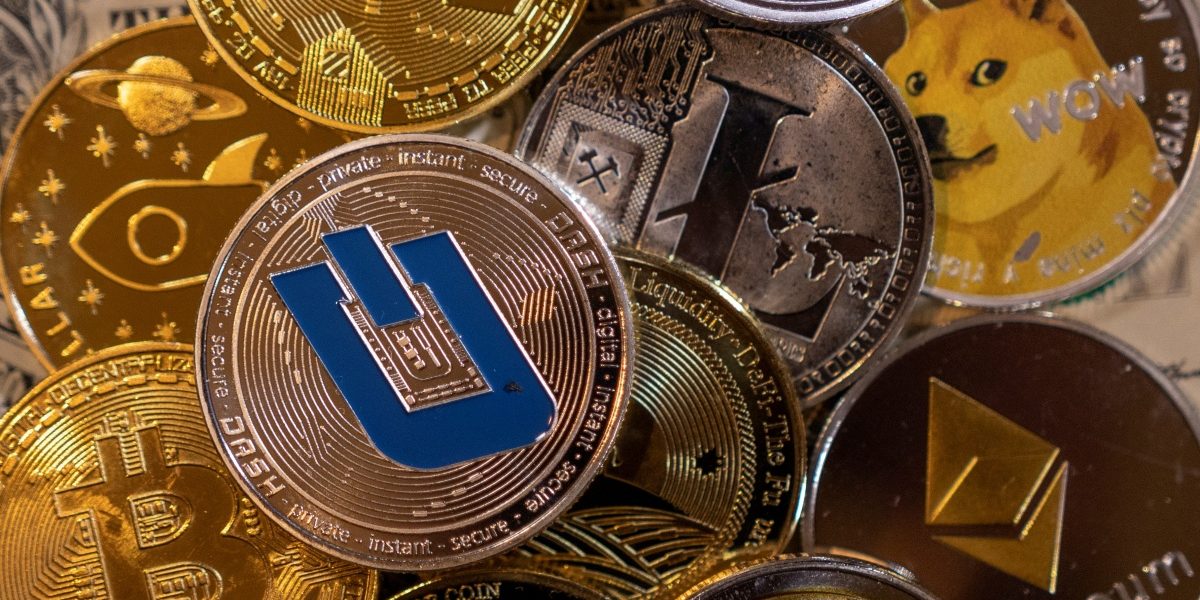
I go through cryptocurrency-related subreddits occasionally just to see what they are thinking. Recently, there was a post about a website which sells cryptocurrency at low fees, the site claimed they sold it with 0% fee, but in reality they were charging 2-3% on card deposits.
Some Redditors were complaining about the fees and misleading advertising, others were worshiping the company for providing such low fees compared to their competitors like the 21st century serfs they are.
Then there was another discussion on the same thread about how this is all the fault of Visa/Mastercard. Yes, it is true that Visa/Mastercard has a duopoly on payment cards, especially in the West. That is not the case in other countries like Russia, China, India, which have indigenous alternatives to reduce dependency.
Back to the point, instead of blaming the capitalist-aligned states for allowing private companies to establish a duopoly over an essential service like payments, they blame VISA/Mastercard themselves. What is the alternative? Bitcoin, of course. The ‘currency’ which is environmentally wasteful, has high fees, high wait times, is highly volatile, vulnerable to theft, and difficult to convert without paying ridiculous fees.
My suggestion would instead be that any essential service like payments should be under public ownership. But for cryptobros, that would be communism.
The cryptobros would argue that the high environmental costs1, high fees2 and wait times3 can be fixed with the Lightning Network, which is another layer on top of Bitcoin which allows users to do payments outside the blockchain, basically admitting that the Bitcoin blockchain is dogshit at what it is supposed to do.
Of course, they are having to admit that a decentralized blockchain system is not feasible, and there has to be some level of centralization for payments to be done quickly. The Lightning Network itself runs on centralized cloud oligopolies like AWS and Google Cloud.4 Then there is the fact that Lightning requires both parties to have it, which I haven’t seen on most sites where crypto is accepted as payment for goods and services.
The crypto bros don’t want to admit it and instead resort to shitting on fiat currencies whenever their broken system is criticized.5 They are very much stuck in the monetarist mainstream economic bubble no matter how much they claim to be ‘radical’. Their argument against fiat currencies is that the Government will ‘print more money’ and cause inflation which is falling into the monetarist trap that inflation is determined by money supply (it is not). Price rises are determined by other factors like aggregate demand/supply, price-setting power, capacity of the economy etc.
Why would anyone want to use Bitcoin?
The cryptobros claim this is the reason why everyone should start using Bitcoin with Lightning. It’s outside the Government control, etc. Leaving aside all the other problems Bitcoin has, at present, the value of Bitcoin is determined by the amount of a fiat currency a person is willing to give to obtain it; it has no intrinsic value.
But you might say, fiat currencies have no intrinsic value either, it’s right in the name! Yes, modern fiat currencies aren’t convertible to gold or some other commodity. However, there are very real reasons people want fiat currency.
a. You need to obtain fiat currency to pay taxes, fees, and fines to the state. The state doesn’t accept Bitcoin as payment for taxes; they only accept the currency they want. This can be a currency they issue on their own, such as U.S. Government accepting the U.S. Dollar or a foreign currency like in France where it accepts Euros.
b. Other people then prefer to accept the fiat currency that the state wants. Why would a fruit seller accept your Bitcoin? They would have to then get someone else who will take it and give them Dollars. There is no guarantee they would find someone willing to take Bitcoin for Dollars.
Thus, people don’t hold fiat currencies just because they want to, but because the state wants them to use it. It is naive to think that if you just convince enough people to accept your magic numbers, you will somehow overthrow the fiat system. That’s not how money works.
If there is no reason to hold Bitcoin, why does it have any exchange value at all?
In most cases, money doesn’t have much (or any) use-value of its own. What is the use-value of gold? Some may like it as jewellery but to make jewellery, labor has to be put into it. Gold in and itself only gets its exchange value when others decide to accept it (for whatever reason) and provide goods and services in return or clear a debt. The only intrinsic use-value I can think of for gold is if someone wants to have it just because it’s shiny.
There have been cases where commodities with their own use-values have been used as currency. Such as in Nazi PoW camps, where cigarettes were used as a common currency.6 The cigarette in and of itself has use-value for some people, relieving stress and filling their cravings. But others didn’t smoke. So the people who really needed cigarettes were willing to forgo consumption of other goods they received in order to obtain it.
In both cases, there has to be some form of compulsion. In the Nazi prison camps, it was because some prisoners had tobacco cravings. In case of gold and other fiat currencies, the compulsion comes in form of the state with its monopoly on violence threatening you to give them gold or some other currency, and to obtain that gold/currency you have to give your labor to the state.
Bitcoin and most other cryptocurrencies doesn’t satisfy either of this. It has minimal use-value, being nothing more than numbers generated by an algorithm (though there are reasons people use it which I’ll talk about in the next section), and there is no compulsion for you to obtain it either.
This is a major reason why crypto prices are so volatile. The desire to hold magic numbers is mainly determined by how much others expect the exchange value to go up/down relative to a fiat currency which they can use to purchase real goods and services made with labor. This volatility then makes holding the cryptocurrency even less appealing.
If Bitcoin has no intrinsic exchange value, why does it cost $60k to obtain one?
Note: I do not condone any of these uses, its just the reality.
There are some reasons why someone might want to obtain Bitcoin (and other cryptocurrencies).
- Sanctions: If your country is sanctioned and barred from accessing the global financial system, one of the ways to obtain foreign currencies and evade sanctions is by purchasing cryptocurrencies. This has been seen with Iran, Russia, DPRK etc.7
- Money laundering and tax evasion: crypto is an excellent way to launder money because of its relative anonymity. It can be used to move money across borders without using traditional means like SWIFT or SEPA. When you send crypto to someone abroad, your name isn’t seen on the state’s ledgers meant to log forex transactions.8 More ‘privacy-friendly’ cryptocurrencies like Monero are even better for this, which is why you see dark web sites accepting it more now over Bitcoin.
- Risky transactions: it is a great way to accept donations if you are WikiLeaks and barred from accepting donations through regular systems like PayPal.9 It can also be used when you want to sell something but believe that the buyer will commit fraud by doing chargebacks on their card. Gift card sellers on gray market sites do this.
- Bypassing trade and capital controls: some countries (especially developing countries) have controls on how much foreign exchange can be obtained by a person within a certain time frame. In India, this is $250k under Liberalized Remittance Scheme (LRS), though there are similar controls in other countries too. By obtaining crypto from the black market, you can then sell it to someone abroad who will give you forex for it.
And the final and most important reason, people are irrational. Despite all the microeconomic textbook assumptions about everyone being perfectly rational, reality doesn’t work like that. People often purchase Bitcoin because they see the line go up while deluding themselves into thinking they are doing something radical and sticking it to the establishment. This applies not just to crypto but to traditional markets too, as seen with the GME or BBBY hysteria.
Cryptobro counter-arguments
The cryptobros would argue that I only mentioned the negative uses of crypto. I disagree, I consider evading (western) sanctions and allowing Wikileaks to accept donations to be a good thing.
- But what about remittances? There used to be a time when money transfer services like Western Union charged exorbitant fees. With internet and more competition in money transfer services this is less of a problem.
- But it provides banking to the unbanked! This makes zero sense, using cryptocurrency requires you to have an internet connection since Blockchain ultimately runs on internet. If you have a phone and an internet connection, you could just as easily use a mobile e-wallet.
For most people, there is no reason to hold crypto long term
For all the other reasons mentioned previously on why people may want to obtain crypto—other than irrationality and, to a lesser extent, tax evasion—there is little reason for people using it for these tasks to hold it long term.
Note: I do not condone tax evasion or money laundering
Let’s say you want to get $1m from India to the U.S. The market rate for Bitcoin for USD is $60,000, which assuming an official USD/INR rate of $1=₹80, is ₹4,800,000. However, because of capital controls and low liquidity, you can’t find anyone who is willing to accept Bitcoin at that rate. They demand ₹5,000,000 to obtain the same amount of Bitcoin. You agree, knowing you would save on capital gains tax long term by hiding your wealth in an offshore account.
You have a USD bank account in British Virgin Islands registered under a shell company, you sell that BTC to someone at the market rate for USDBTC that is $60,000=1BTC. The Bitcoin is sold, you no longer have to worry about someone robbing & murdering you for your crypto or about Bitcoin’s volatility. Everything is settled in a day.
This applies to other cases as well. Let’s say you accept BTC for selling Coke. Someone buys Coke worth $500 from you, and at a market rate of $60,000=1 BTC, that gives you 0.008333 BTC. Now, a day passes, and Bitcoin crashes. Now, it’s $40,000=1 BTC. If you sell your 0.008333 BTC, you only get $333. That’s a $167 loss. This is why most black market sellers convert to stablecoins as soon as possible, to minimize the exchange rate risk. I’ll talk about stablecoins and why they are better in most cases for everything but speculation (see the irrationality part in the previous section).
Stablecoins have more utility in most cases mentioned previously.
Most gray and black market sellers now prefer altcoins and stablecoins over Bitcoin, for the reasons I mentioned in the fourth paragraph. Stablecoins have low fees, are pegged 1:1 against a fiat currency, have fast transfer times, and have a low environmental impact (some of them at least).
Bitcoiners would argue that the centralized nature of stablecoins goes against the decentralized nature of crypto. Firstly, crypto isn’t decentralized. Look at what % of total supply top wallets hold. Secondly, the decentralized nature of the Bitcoin blockchain is what makes it inefficient, and why a centralized layer had to be added on top.
I have noticed that most gray and black market sellers now prefer USDT-TRC, which is the stablecoin Tether on the Tron blockchain. They don’t have to worry about volatility; fees are low, and it is fast. It can be laundered just as easily, because major crypto exchanges accept it as well.
This isn’t to say Tether is perfect. It is issued by a shady private company in the British Virgin Islands and has a controversial past.10 The collapse of TerraUSD in 2022 massively reduced the trust many people had in stablecoins.11 However, TerraUSD was a ‘decentralized’ algorithmic stablecoin, which did not hold any dollar-denominated assets and was backed by its volatile sister token LUNA. That is not the case with Tether, which is at least partly backed by dollar-denominated assets by Tether Inc. Thus, even extremely flawed stablecoins like USDT are more reliable than regular cryptocurrencies that are not pegged to anything.
Lastly, stablecoins are just as vulnerable to theft and fraud as regular cryptocurrencies are. And if your wallet is hacked, there is no way to get your coin back.
I do not believe most people should hold stablecoins long term either, because of all the risks mentioned, as well as the fact that you don’t get any interest unless you stake (which increases your risk). But I would trust holding it over Bitcoin for short periods of time.
Monero
Monero is a ‘privacy-friendly’ cryptocurrency. It has an obfuscated blockchain that hasn’t been cracked yet. This makes it another good alternative for the uses mentioned previously (money laundering, tax evasion). Most dark web sellers nowadays accept Monero over Bitcoin.12 13 Obviously, it isn’t backed by anything, just like Bitcoin, but has low fees and fast transfer times (because it is less congested). The volatility means that it is still best to convert to stablecoins quickly.
Cryptocurrencies are too rigid to be used as a state currency
Now that we understand that the value of fiat currencies is derived not from their supply (which is what crypto bros think, regurgitating monetarist nonsense) but from how much goods and services can be obtained using it, and the compulsion to obtain it, it is clear to see that the limited supply of cryptocurrencies makes it unsuitable as a state currency.
A sovereign fiat currency gives the state great flexibility in how to mobilize real resources and get people to work. The state can adjust spending and run deficits without having to worry about running out of money to meet its goals. This kind of flexibility isn’t present with cryptocurrency.
There are exceptions to this, such as in cases where countries peg their currency to another or use a foreign currency, but even that has more flexibility than cryptocurrency. The state can decide to break the peg if there is too much pressure, enact capital controls, raise interest rates, etc. Even in cases where the state is using a foreign currency (like the Euro), the currency itself is still fiat, and the issuer can create ‘unlimited’ amounts of it (see the ECB buying up member countries’ debt).
During COVID, all the Western governments increased fiscal deficits, and the EU invoked the emergency rules in the SGP to allow members to increase spending. It may be argued that most of the increased spending went to the top income percentiles (multi-millionaires and billionaires), and that is certainly true, but it was also a time when lower income percentiles showed an increase in wealth (albeit much less than the rich).
With cryptocurrency as the state currency, such expansion would not have been possible; the state would have been revenue-constrained. Yes, the government could issue debt, but since the debt isn’t sovereign, it is dependent on bond markets and their willingness to purchase the said bonds. And unlike the EU countries, the government couldn’t ask whoever issues the currency, since cryptocurrency has a fixed and limited supply. This would’ve been a disaster, with a large decline in output, mass unemployment, a sharp decline in living standards, etc. The only way to get out of this mess would be if the government started issuing its own currency and regained monetary sovereignty.
That’s all.
- https://www.theguardian.com/technology/2021/sep/17/waste-from-one-bitcoin-transaction-like-binning-two-iphones ↩︎
- https://www.forbes.com/sites/colinharper/2024/04/22/bitcoin-transaction-fees-hit-record-levels-after-halving—heres-why/ ↩︎
- https://blog.coinpayments.net/resources/why-do-bitcoin-transactions-take-so-long ↩︎
- https://www.ccn.com/news/bitcoin-lightning-centralized-aws-google-cloud/ ↩︎
- https://www.coindesk.com/tech/2020/02/20/bitcoins-lightning-network-is-growing-increasingly-centralized-researchers-find/ ↩︎
- https://www.ncbi.nlm.nih.gov/pmc/articles/PMC2117377/ ↩︎
- https://www.bloomberg.com/news/articles/2023-02-24/huobi-kucoin-are-allowing-sanctioned-russian-banks-access-report-says ↩︎
- https://www.unodc.org/roseap/en/2024/casinos-casinos-cryptocurrency-underground-banking/story.html ↩︎
- WikiLeaks – Wikipedia ↩︎
- https://en.wikipedia.org/wiki/Tether_(cryptocurrency)#Questions_about_dollar_reserves ↩︎
- https://www.cnbc.com/2022/06/02/ust-debacle-will-probably-be-the-end-of-algorithmic-stablecoins.html ↩︎
- https://cointelegraph.com/news/bitcoin-monero-reportedly-stolen-darknet-market-exit-scam ↩︎
- https://www.wired.com/story/csam-sellers-monero-rise/ ↩︎