
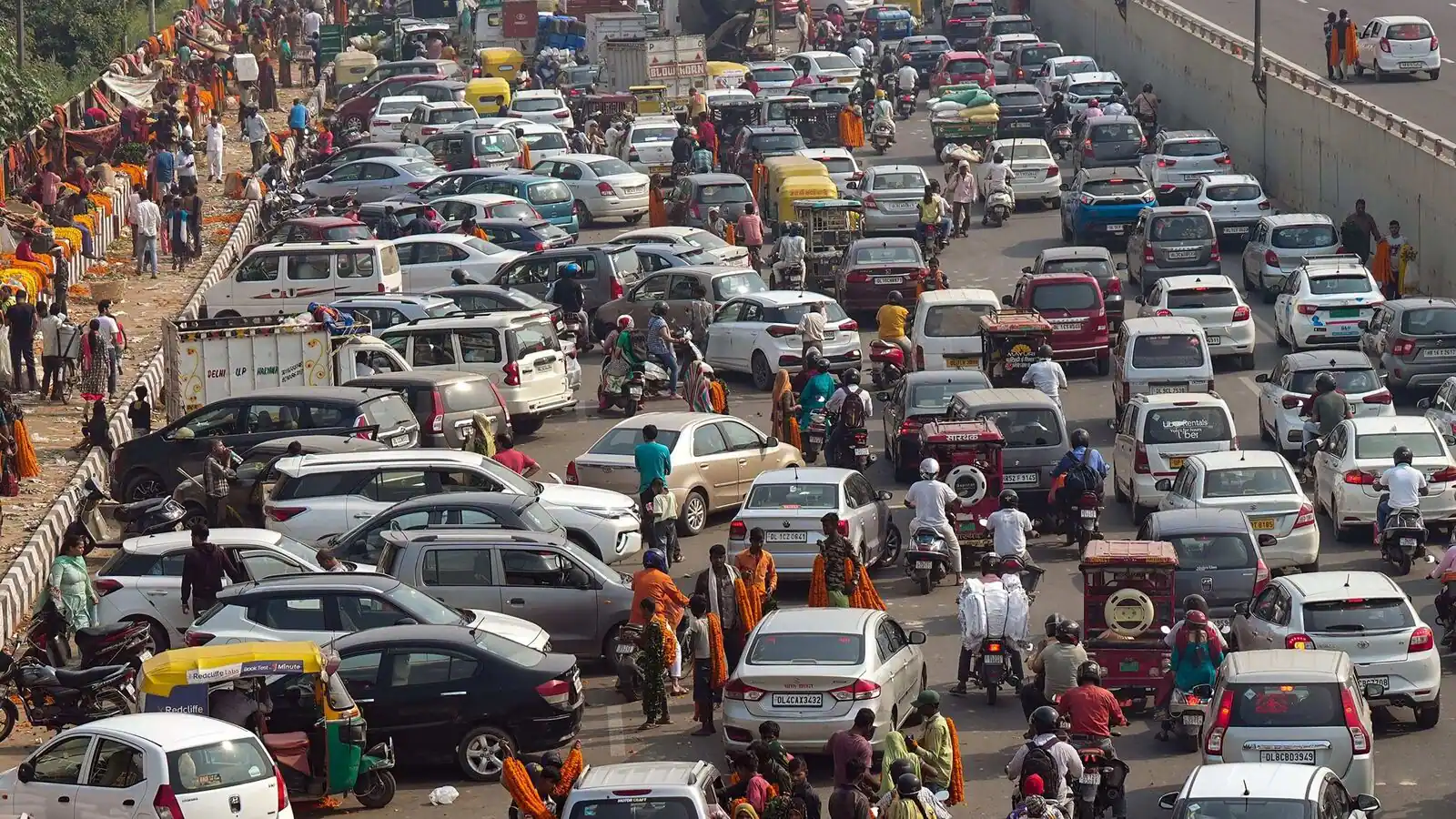
Privileged failsons/faildaughters in their luxury cars killing pedestrians and motorists is daily news in many countries, including India. Most of the progressive outlets criticize the two-tier justice system and income/wealth inequality.1 I believe that there is more to this.
The type of cars on Indian streets has changed
Vehicle sales in India have exploded since neoliberal reforms were implemented in 1991. In 1991, there were a mere 21.4 million registered vehicles in India; in 2011, it was 141.9 million, and in 2020, it was 326.3 million.2 Yes, the growth has slowed in recent years, in part due to the economic slowdown from demonetization, GST, fiscal austerity, and market saturation (the majority of Indians cannot afford motorcycles, let alone cars).3
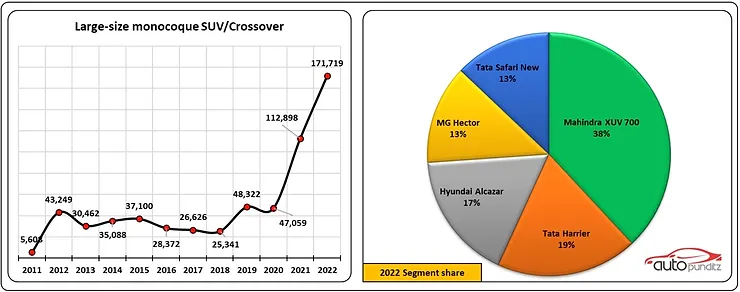
From 2011 up until 2018, Maruti Suzuki Alto had the largest market share. Alto is a compact and affordable hatchback car with high fuel efficiency and relatively low maintenance costs, which made it appealing to the new ‘middle-class’ that formed post-1991.
After 2018, Alto’s spot was taken over by the Swift DZIRE, which was a much larger and more expensive car.4 Why? Because widening income and wealth inequality in India meant that those in the top 5% could now afford it. But the next 5-10%, who previously could have bought cheaper cars like the Alto, could no longer do so because of stagnating or decreasing purchasing power.5
This can be seen by the fact that two-wheeler sales have been stagnating or decreasing since 2018. Two-wheelers, which were once a symbol of the emerging ‘middle-class,’ especially in rural India, were no longer selling well because of successive economic shocks.6
Thus, smaller passenger cars and two-wheelers have seen either stagnation or decline in sales since 2018. What increased? More expensive, larger cars, of course. SUVs and MUVs amounted to 60% of all vehicle sales in September 2023. The size difference between the 2018 top-selling car and the 2023 top-selling car is significant.7
| Car | Length | Width | Height |
| 2023 Maruti Suzuki Swift | 3840 | 1735 | 1495 |
| 2016 Alto 800 | 3430 | 1490 | 1475 |
| Size increase (%) | 11.95335 | 16.44295 | 1.355932 |
So, we have cars becoming larger, less people purchasing smaller cars and two-wheelers due to deficient demand.8 The result? More traffic fatalities. It is very well known that while larger vehicles may be safer for the driver, it is much more dangerous for the pedestrians and those in smaller vehicles.9 There is a reason why the drunk driving failsons in luxury cars survive running over homeless people and into a tree.
People-centric urban design is necessary
I have noticed that roads in India are being built/rebuilt to be made more car-centric. How so?

This is a major traffic junction in New Delhi connecting two major roads. This location has street vendors, buses, and pedestrians, but notice how much space the vehicles get compared to pedestrians. The traffic lights prioritize vehicle traffic over allowing people to cross, making it very dangerous, especially considering Delhi doesn’t exactly have the best driving culture. Pedestrians have no place to stand while crossing, there are no pedestrian islands, and cars don’t stop at the stop line before pedestrian crossings, forcing people to go in front of cars, which can be dangerous if the driver doesn’t see them.
There are countless other examples like this; almost every major junction in India looks like this. Wide open roads prioritize vehicle traffic over pedestrian safety. It shows how much cars have influenced the minds of urban planners in our country.

This is Connaught Place, the heart of the city where the top 10% go to shop. Yet, even in such a district where more pedestrian-centric design would bring in more sales for businesses, we see wide one-way roads with no way to cross without the risk of getting killed.
It’s not just the roads; whatever small strip of sidewalk exists is often obstructed by cars or motorcycles parked by scumbags, trees, and other barriers. Most of the time, the sidewalks are much less maintained compared to the roads. It is a nightmare for disabled people.

This kind of hostility towards pedestrians is unacceptable. It is as if India is trying to emulate the U.S., which is even more car-centric than our country.
Pollution
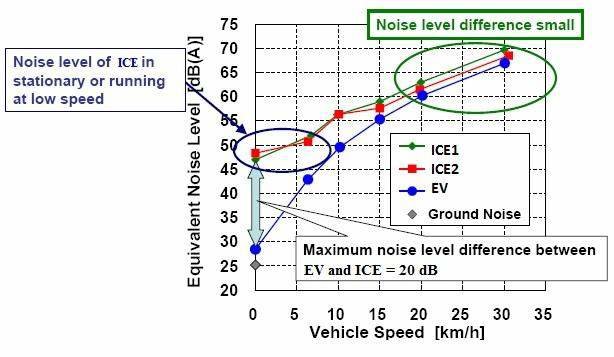
While exhaust air pollution is not a concern with EVs, there are other issues. Firstly, electric cars still produce noise pollution, whether it’s tire/road noise or motor noise. Electric cars are really quiet at lower speeds, but they get very close to ICE cars in terms of noise at higher speeds.10
In Northern India, urbanites like to blame stubble burning for the air pollution in their cities. In reality, vehicles are the worst offenders.11 Even EVs can cause air pollution (ignoring emissions in production and assuming they’re powered by renewables) through the re-suspension of dust and particulate matter.12
By prioritizing cars, cities are making pollution much worse.
Public transport
Larger Indian cities have ‘okay’ public transport options. New Delhi, for instance, has government-owned buses and a metro system. However, these are clearly inadequate for the city’s needs. The prioritization of cars also discourages the use of public transport.
The neoliberal claim is that public transport is ‘financially expensive.’ Ignoring the fact that sovereign states are not revenue-constrained and can mobilize real resources to fulfill their mandate, the government spends ridiculous amounts of money building roads, widening existing roads, and constructing new roads where the environmental cost is too high. Public transport is a public utility just like public roads and should be made free with monthly distance quotas. Investment in buses and metro systems must be made to ensure that demand is met.
Public transport is inherently more efficient, less polluting, and causes less traffic congestion. There is a reason why even smaller cities in the former Soviet Union have metro systems and trams.13
What is to be done?
- India should learn from European cities like Amsterdam and recently, Paris.14 The argument that these are rich first world cities is invalid considering how much money we waste on unnecessary roads and how much money is wasted because of people dying from pollution.15 16
- Wide sidewalks, speed bumps, trees on side of the road to make the drivers focus on roads and force them to slow down, strictly enforced speed limits are all necessary if we don’t want cities where people are killed constantly by vehicles.
- The state must subsidize and encourage cycling. This can be done by having more tree cover to ensure that both pedestrians and cyclists don’t die of heatstroke in the 50C summers of New Delhi.17
- Strict limits must be placed on size and weight of cars to ensure that pedestrian safety isn’t compromised. Bring back the old small type cars like Alto.
- This one’s obvious, switch to EVs. EVs aren’t perfect but it’s a definite upgrade over ICE vehicles.
- Massive Central Government investments in public transport throughout the country. The transport utility can be managed by the state/districts but funded by the Centre.
That’s all.
- https://thewire.in/society/the-pune-minors-porsche-crash-have-we-failed-as-a-society ↩︎
- https://morth.nic.in/sites/default/files/RTYB-2017-18-2018-19.pdf ↩︎
- https://theprint.in/india/only-8-indian-families-own-cars-nfhs-finds-over-50-still-use-bicycles-bikes-scooters/971413/ ↩︎
- https://www.autopunditz.com/post/top-10-selling-cars-in-india-for-the-last-10-years ↩︎
- Note that these percentiles may not be perfectly accurate. The reason why I refused to use ‘lower/upper end of the middle-class’ is because ‘middle-class’ in India really refers to the top 20%. ↩︎
- https://auto.economictimes.indiatimes.com/news/two-wheelers/despite-17-growth-in-fy23-two-wheelers-still-at-a-8-year-low/99773320 ↩︎
- https://thewire.in/economy/low-small-vehicle-sales-rush-for-gold-loans-point-to-economic-distress ↩︎
- https://www.business-standard.com/industry/auto/entry-level-car-two-wheeler-sales-still-below-pre-pandemic-peak-levels-124041200798_1.html ↩︎
- https://theconversation.com/big-cars-might-make-you-feel-safer-but-heres-how-vehicle-size-impacts-others-in-a-crash-223343 ↩︎
- https://www.researchgate.net/figure/Noise-level-comparison-between-EV-and-ICE-vehicles-at-various-speeds-Sandberg-et-al_fig7_288270778 ↩︎
- https://www.cseindia.org/vehicles-the-biggest-contributors-to-winter-pollution-in-delhi-cse-11048 ↩︎
- https://www.oecd-ilibrary.org/sites/e1bc711b-en/index.html?itemId=/content/component/e1bc711b-en ↩︎
- https://en.wikipedia.org/wiki/List_of_metro_systems_in_the_Soviet_Union ↩︎
- https://www.lonelyplanet.com/news/amsterdam-car-free-plan ↩︎
- https://www.worldbank.org/en/country/india/publication/catalyzing-clean-air-in-india ↩︎
- https://www.financialexpress.com/business/infrastructure-central-government-infra-projects-face-record-rs-5-5-lakh-crore-cost-overruns-indian-railways-hit-hardest-3520155/ ↩︎
- https://sundayguardianlive.com/news/delhis-inadequate-green-cover-amplifies-urban-heat-island-effect ↩︎