
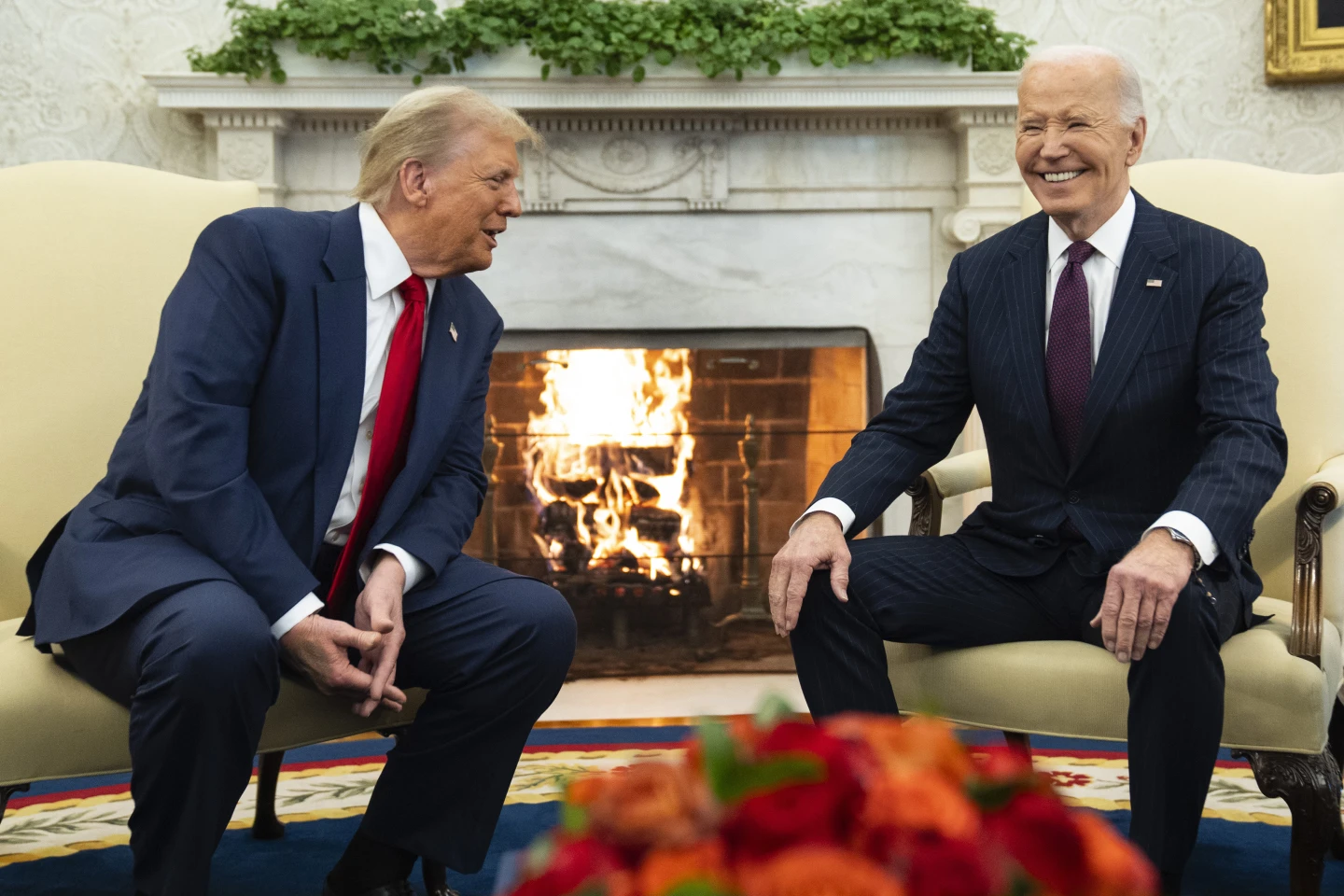
Donald Trump was elected as the U.S. President on November 5th, 2024, and unlike the last time, he won not only the Electoral College but also the popular vote, something no Republican President has done since 2004.
The reason for this is obvious: Biden’s neoliberal economic policies, combined with inflation caused by corporate price gouging as well as oil price spikes, caused major discontent among the American people who instead decided to vote for a fascist. This fascist obviously will not change anything; in fact, he will likely weaken regulatory agencies meant to keep corporate price gouging in check.
Regardless, what I wish to talk about is how the election will affect India. Since the dissolution of the USSR and the rise of neoliberalism, global economic policy has been grounded on so-called ‘free trade’ and free capital flows. One of Trump’s policies is protectionism, meaning the imposition of barriers on trade to protect domestic industries. The issue is that even if the tariffs were implemented in a way to expand domestic manufacturing within the U.S., it will still have a negative effect on India.
Globalization has led to a very interconnected and fragile global economy. We saw this during the early months of the COVID pandemic, when PPE to protect people from the virus was difficult to find due to manufacturing being concentrated in China. If the U.S. raises tariffs on imports, there will be a decreased demand for goods (and perhaps services) within the U.S. This will be bad for India since the U.S. is one of India’s largest trading partners.
However, there is another thing to consider. Trump was never against free capital flows; he very clearly will not place any restrictions on transfers of dollars to India. So, any reduction in exports could be made up by an increase in capital inflows to India. This will increase India’s current account deficit, but it will also prevent an apocalyptic scenario.
This is likely why SBI’s recent report stated that the Indian Rupee will only depreciate by 8-10% under Trump II. Most people will look at that and think, ‘Oh my god, that’s so much!’ However, an 8-10% depreciation, while bad, will by itself not be devastating for the Indian economy on the import side.1
The first major depreciation under George H.W. Bush was due to the 1991 Indian Economic Crisis, when India was forced to devalue its fixed exchange rate and seek IMF assistance after running out of foreign exchange reserves. Since then, India has maintained a fairly stable depreciation in the exchange rate under each presidency.
In fact, it was during President Obama’s second term that the Indian Rupee depreciated sharply, something everyone was discussing at the time. The then BJP politician Narendra Modi criticized the Indian government for the depreciating Rupee. However, with open capital and current accounts, the Indian government has limited control over the exchange rate. This was true then and remains true now.
The RBI has managed to stabilize the Indian Rupee for the time being, with depreciation being very controlled. However, even with large foreign exchange reserves, the RBI cannot keep the Rupee significantly stabilized for an extended period.
Only a few large countries can maintain a fixed exchange rate for extended periods. China is one of these, mainly because it runs a large current account surplus and has accumulated substantial foreign exchange reserves. Even with this, China keeps tight control over its capital accounts, making it difficult to transfer large amounts of money out of the country.
India, by contrast, runs a current account deficit and depends on capital inflows to manage the exchange rate and maintain its deficits. Its ability to stabilize the exchange rate is therefore quite limited.
One must look beyond exchange rates. Imposing tariffs and related trade barriers by the U.S. will, without government intervention, lead to increased unemployment and reduced economic activity unless India finds alternative markets to export to, which is unlikely.
This is the main reason why export-led growth can be dangerous. It creates dependence on demand in other economies. If demand decreases for any reason, exporting countries will face economic instability.
The Indian government can play a large role in mitigating this by guaranteeing employment for all and expanding the public sector. Without increased government spending that does not directly leak abroad or get hoarded by the wealthy, India will face significant challenges.
- https://www.business-standard.com/finance/news/rupee-may-depreciate-8-10-against-dollar-during-trump-2-0-says-sbi-report-124111101452_1.html ↩︎