
Recently, I read an article on the slowdown of credit growth in India. Since the end of 2015, there has been a gradual and consistent decline in industrial credit as a share of total credit. This is partly due to successive shocks to the Indian economy, such as demonetization in 2016, the introduction of GST in 2017, and the COVID-19 pandemic from 2020 to 2022.
However, these aren’t the only reasons. Many liberal economists point to these policy-induced shocks. While these shocks certainly contributed to India’s current economic issues, there is more to the story.
It’s important to remember that private investment depends on demand for goods and services. Capitalists do not invest unless they foresee profits. Their primary concern is turning money into more money; everything else is secondary.
Thus, incentives to invest such as PLI/ELI schemes, tax cuts, or free land won’t be effective if demand is lacking. The government must ensure that people have enough money to purchase goods and services.
India is a highly unequal country, and one consequence of this inequality is that the majority of people (~80-90%) have very low purchasing power. If you earn ₹10,000 a month and have a family with a wife and two children, your entire income will be spent on essential goods, items you cannot live without, such as food, clothing, and shelter. You won’t have the means to buy a car or even a scooter because your savings will be zero. In many cases, you may even need to borrow money to cover essential expenses, especially in emergencies, such as the death of a family member.
This is also why sales taxes hurt the poor. If a 5kg bag of flour costs ₹500 and a 10% tax is added, that ₹50 is money the person cannot spend on something else or save for future consumption.
The poor (and private sector in general) can only take on so much debt before banks start denying them loans due to the risk of default. Unless, of course, the bank is a public sector institution that can afford to provide, and later write down or write off, such loans while remaining sufficiently capitalized. We have seen similar loan haircuts given to oligarchs.
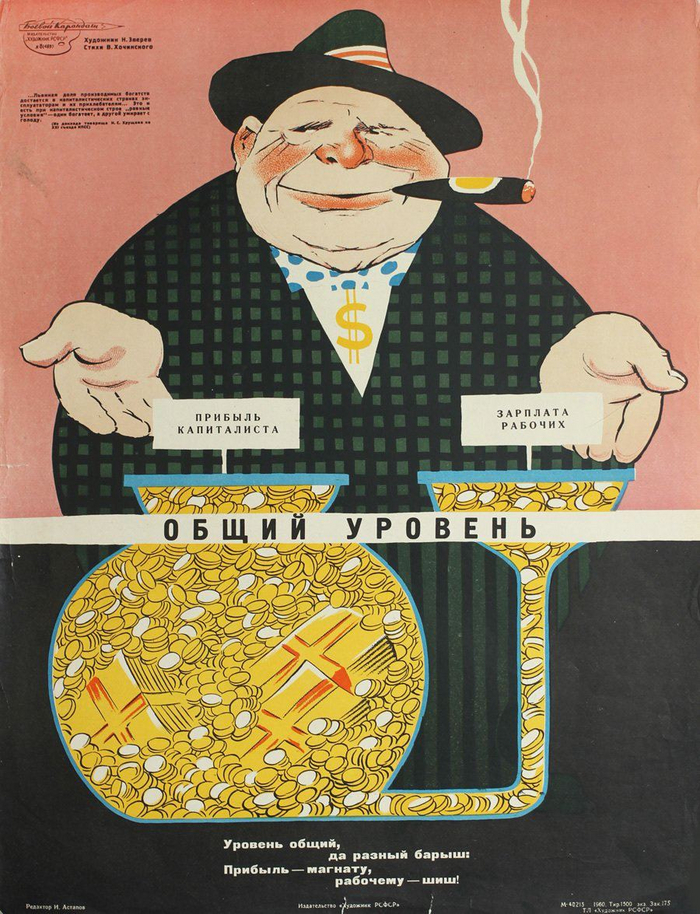
High inequality creates a situation where the poor, who spend most of their income on basic needs, lack the purchasing power for anything beyond essentials, while the rich hoard their wealth. The most extreme example of this is the existence of billionaires.
This is why government spending is so critical. It must be targeted to increase the real income of the lower percentiles. One effective way to achieve this is through a Job Guarantee program, which would expand MGNREGS, making it universal and providing a fixed wage equal to the minimum wage.
Only such policies can create demand for goods and services in the economy.
That’s all.