
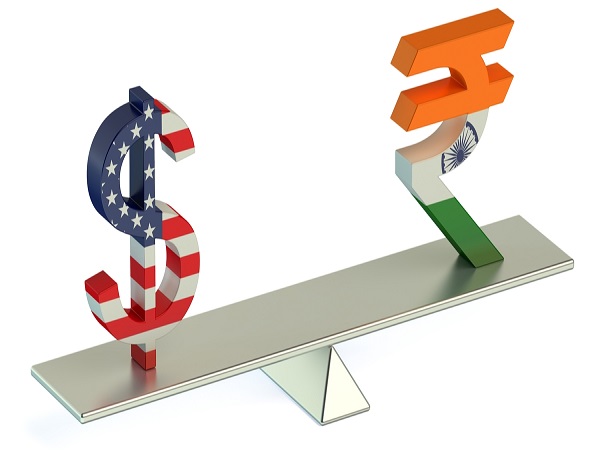
I’m disappointed in how major opposition parties have framed some of their criticisms of the Government. One talking point is that the Indian Rupee exchange rate has hit new ‘lows’; ‘down’ is another word used.
Recall that the last significant threat of exchange rate depreciation was back in 2013, under the UPA-II Government. Then, U.S. Central Bank rumors, now referred to as ‘taper tantrum,’ triggered a massive outflow of foreign capital from developing countries. . Note how the Indian Government had very little control over this. Such depreciation occurred across all developing countries, with India being just one among many. Yet, the opposition, now in government, blamed the then government for the depreciating Rupee. Over a decade later, the roles have reversed, and the criticism remains the same. In reality, neither government had significant control over the exchange rate.
**removed this part**. However, blaming them for the USD/INR exchange rate seems unfair.
Firstly, we must dispel the notion that a depreciating currency is inherently bad. Words like ‘down’ or ‘lows’ often make people think negatively. In reality, evaluating the nominal exchange rate without context can lead to incorrect conclusions. Is the depreciating exchange rate causing higher prices due to the pass-through effect? If so, which goods/services are most affected? Which income groups are the most affected? Or is it increasing trade competitiveness because exports are cheaper? Is it discouraging the import of goods/services consumed by higher income earners? All these aspects must be considered.
Secondly, in an economic environment where trade and capital flows are liberalized, the exchange rate cannot be easily controlled by the RBI. Why? Because doing so would require the RBI to absorb excess Rupees from the foreign exchange markets. Since the RBI cannot issue U.S. Dollars, it can only manage excess Rupees by drawing down its foreign exchange reserves. The reserves don’t come out of thin air, reserves increase due to trade and capital inflows, it is thus a limited resource.
This is in contrast to the short term interest rate, which can be set by the RBI. Why is that? Because all the market operations in such a case are done in Rupees. Whether it’s draining excess bank reserves through open market operations or providing reserves in case of shortages, it is all done in Rupees.
With liberalized trade and capital flows, the domestic private sector significantly influences the exchange rate. For example, you can currently go to Amazon U.S. and purchase shoes worth $1,000. Nothing prevents you from doing this (Indians are allowed to obtain up to $250,000 under the LRS, and larger importers can get much more). The RBI must accommodate the effects of your purchase on the exchange rate. There are ways to discourage such purchases, like import tariffs, but in the neoliberal era, tariffs on trade have been minimized, and the current account is largely open; you can also try undervaluing in the customs form, risking customs detention.
The above is just an individual example, in reality, it happens on a much larger scale. India imported $69.95bn worth of goods in November 2024.
Then there are foreign investors, around whom domestic economic policy is tailored in the neoliberal era. India issues both Rupee and foreign currency-denominated debt to foreigners. I say India and not the Indian Government because the domestic private sector can also issue debt, which is then bought by foreigners. There is also the much more fickle Foreign Portfolio Investment, which involves mainly the purchase of shares in Indian companies. In fact, FPI outflows, i.e., foreign investors selling their investments, obtaining Rupees, and then exchanging them for Dollars and other foreign currencies, are partly to blame for the recent exchange rate depreciation.
Again, the RBI has to accommodate foreign investor requirements for foreign exchange. Foreign investors are provided with full capital account convertibility, unlike regular individuals who face capital controls.
What does all this mean? With open current and capital accounts, the RBI has very limited control over the exchange rate. But what about China? They have a crawling peg against the U.S. Dollar! Unlike China, India runs consistent Current Account Deficits, i.e., it generally imports more than it exports, this results in a consistent excess supply of Rupees in the international markets. Also note that China has much tighter trade and capital controls (at least in most cases).
Thus, China is only able to have a crawling peg because of its large current surpluses as well as trade and capital controls.
Even pre-1991, when India had fixed but periodically adjusted exchange rates, it run consistent current account deficits, this could’ve only been possible either capital inflows or drawing down reserves. Such an arrangement was unsustainable, periodic devaluations alleviated some pressures but Governments are typically afraid of devaluing too much due to the fear of pass-through inflation.
China has also been letting their exchange rate depreciate in a controlled manner, especially with Trump becoming U.S. President, to counter some effects of tariffs.
There is one more thing that must be noted. The RBI can try targeting an exchange rate that is below the market rate. For example, if the market exchange rate is $1 = ₹85, it can try targeting ₹90 instead. This will require it to provide more Rupees for every Dollar it receives, the RBI can do so because it is the state issuer of Rupees. In fact, that’s what China did until 2005, it maintained a fixed exchange rate against the Dollar where its currency was undervalued. Back then, U.S. and Western countries accused China of currency manipulation. In reality, this was a sound strategy to boost trade competitiveness when China was building its industrial base and Chinese goods were in heavy demand in the West due to rising private sector indebtedness.
India also engaged in similar activities, though not to the same extent, when it saw massive foreign capital inflows during the early 2000s boom. These inflows undermined trade competitiveness by making exports more expensive. Such effects have been noted in many other countries, such as Brazil and Mexico. At that time, the RBI tried to depreciate the currency and prevented it from appreciating too much, a process that saw its foreign exchange reserves balloon from $35 billion in 2000 to over $300 billion by 2008.
The world has moved on from the 2000s, and more countries are building up trade barriers, meaning India cannot rely on the next phase of export-led growth. Ultimately, there must be demand for exports in the world market. With Trump announcing plans for tariffs and cuts in government spending, which will likely reduce demand in the U.S., India needs to build up domestic demand, increasing incomes of lower-income groups through targeted government spending.
Thirdly, there is always the concern of exchange rate pass-through (ERPT) whenever Rupee depreciation is mentioned. I would argue that increase on prices of goods and services mainly consumed by top income segments isn’t much of a concern. This includes for instance, Indians traveling abroad on vacation. Let such prices increase, have them vacation domestically or pay the higher prices.
The reduced import demand from depreciation will allow domestic manufacturers to compete against foreign imports. As stated earlier, increasing domestic demand for goods/services is important, and government spending must increase for this to happen.
Commercial fuel usage can be subsidized so that the effects of increased transportation costs from exchange rate pass-through are minimized. The effects on the exchange rate are unlikely to be significant as such subsidies are very targeted. The government can also draw down its reserves to purchase fuel instead of wasting them trying to keep the exchange rate fixed.
One of the essential goods India cannot produce is crude oil. India must increase cooperation with countries like Russia & Iran and increase direct trade with them. Indians have sadly not benefited from the discounted crude oil purchased from Russia, partly due to the government’s mistaken belief that fuel taxes fund government spending, as well as private and public sector companies selling refined fuel to Europe.
India must also invest in nuclear & renewable energy+storage. It should discourage cars and promote public transport wherever possible. It can reduce air travel through investments in high-speed rail. Unfortunately, we aren’t moving in that direction. Quite the opposite.
Lastly, the trade competitiveness aspect must be looked at more carefully. Exports aren’t as sensitive to changes in exchange rates as Imports are in developing countries like India, especially in the post-2008 era where global demand has generally been subdued. We can look at our neighbor, Sri Lanka, for an example.
India and Sri Lanka comparisons are generally not valid due to the vast differences in size and economic diversity. But, there is one aspect we must look at, after balance of payments crisis in 2021-2022, they ‘decided’ to devalue their currency by 80%. The result was massive import compression; exports increased, though only marginally, while imports collapsed.
Why did exports only increase marginally? The currency crisis there had already caused shortages in foreign goods used as inputs, the production as a whole collapsed. The 80% devaluation also caused massive increase in prices of imported inputs, even when available which was also transmitted to export prices.
The collapse in import demand however bought their current account to a surplus which allows for external debt servicing. Indian newspapers are constantly talking about current account balances, ‘India’s trade deficit increased!’. However, trade and current account balances are outcomes, not causes, of whatever issues may exist with an economy.
There are several differences between India & Sri Lanka in this case. Indian economy is much larger and more diversified in part due to India’s dirigiste era pre-1991. Indian Government external debt is low compared to Sri Lanka & the Indian Rupee has a much larger market and thus more liquidity compared to the Sri Lankan Rupee. A sudden 80% devaluation of the Indian Rupee is unlikely unless there is a civil war or some other major crisis, a 20% depreciation over a year is not the same as an 80% sudden devaluation.
The Sri Lankan example does show us that exchange rate implications on inputs must be kept in mind, and that exports may not see an increase unless there is demand for them in the global market, even with an improving real exchange rate.
The RBI has possibly been reducing exchange rate interventions, allowing the Rupee to depreciate. This is good to see; it’ll reduce the pressure on reserves and help maintain trade competitiveness. There should also be tighter controls on capital flows.
That’s all.