
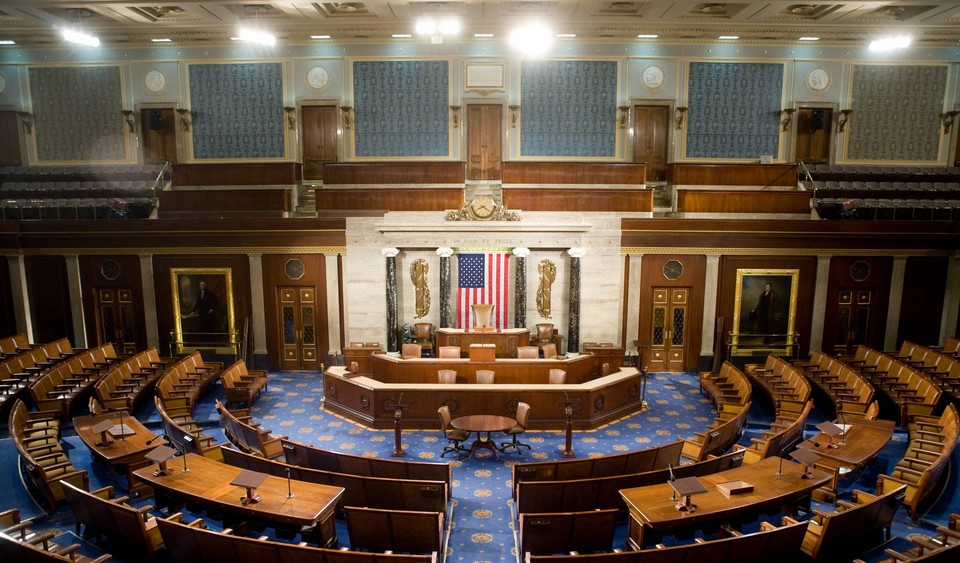
Recently, the U.S. House of Representatives passed the “One, Big Beautiful Bill Act”, the bill is expected to pass through the Senate. I’m not going to go into how anti-worker, anti-poor the bill is, you can read about it here. Today I’m going to talk about the 3.5% tax1 on remittances part of this bill. Much has already been written in the U.S., Indian, and foreign press about how it will affect remittances. I do not believe it will have a significant effect on remittances abroad.
Why?
Because the control simply isn’t wide enough. It only applies to a small part, 14.3% of the population, i.e., non-citizens. There are no taxes on remittances for U.S. citizens. This means any non-citizen can simply transfer money to a U.S. citizen, who can then remit it abroad without getting taxed. I’m not a lawyer, but from what I’ve read, the taxes only apply to the sender, it doesn’t matter if they are doing it on someone else’s behalf. It isn’t even illegal to do so.
For purposes of this subsection, the term ‘verified United States sender’ means any sender who is verified by a qualified remittance transfer provider as being a citizen or national of the United States pursuant to an agreement described in paragraph (2)
Page 10562
So, the remittance transfer providers are only required to verify whether the person sending the funds is a citizen or not. There is nothing about the source of the funds or whether the remittance is on someone else’s behalf. It isn’t even illegal!
Another way is by simply labeling the transfer purpose as payment for goods and services instead of remittance. This of course is considered tax fraud but for small, occasional amounts it is unlikely to be caught.
This is a form of (very ineffective) capital control
Capital controls much derided by western institutions like the World Bank or the IMF especially before the 2008 Financial Crisis, have reached the U.S. Taxing flow of funds is a form of ‘soft’ capital control. In the 1980s, after the collapse of the Bretton Woods system, the U.S., like most western countries, got rid of all controls on the flow of funds in and out of the country. So, there were no taxes, quotas, or direct restrictions on personal or business remittances, investments, or wire transfers abroad.
Since then, and until recently, there were no capital controls except for payments to sanctioned entities or countries. Hence, such a remittance tax is quite unprecedented. However, it remains very ineffective precisely because of how targeted it is.
Capital controls have to be quite broad to work properly. You can see this with India and China, both countries have controls on capital flows. Indian residents, for example, can send up to $250,000 a year under the Liberalised Remittance Scheme; any more than that requires more paperwork and approval from the central bank, the RBI. Notice how it applies to all residents, not just non-citizens.
Remittance taxes targeted towards just non-citizens will not be very effective.
Wide capital controls will only undermine the Dollar
The U.S. dollar remains the world’s reserve currency and is widely used in trade precisely because it is freely convertible and without capital controls. As I said, a remittance tax exclusively on non-citizens will not be effective. And a broad tax that applies to all outflows will undermine the role the dollar plays in the global financial system. Everyone expects the U.S. dollar to be freely convertible and without any capital controls. This absence of capital controls is one of the biggest competitive advantages the U.S. has in global finance.
Hence, if the U.S. wants to maintain the dollar as the global reserve currency, it must not enact wide capital controls.
Will it reduce remittances?
Yes, I do believe it will reduce remittances somewhat. Any control is worse than no control. However, it will not be very effective for the reasons stated.
That’s all.
- https://kpmg.com/xx/en/our-insights/gms-flash-alert/flash-alert-2025-105.html ↩︎
- https://www.congress.gov/119/bills/hr1/BILLS-119hr1rh.pdf ↩︎