
Turn on the news and you’ll see the U.S. and its allies acting with impunity while the rest of the world watches and does nothing. Some countries occasionally issue statements about how “concerned” they are over U.S. allies starving millions with blockades that resemble the siege of Leningrad. But concern is where it ends. No real consequences. No sanctions. No efforts to intervene. Most countries behave as if this is just the way things are now.
This passivity isn’t just politics. It shows a world that no longer believes in alternatives. The era when the USSR, at least partly, pressured the U.S. to grant civil rights to Black Americans is over. The era of fighting poverty is over. The era of taxing the rich to reduce inequality is over.
The same pattern unfolded across the Western world. European welfare states, Nordic social democracy, and the NHS in the U.K. were not gifts from capitalists. They were concessions made under the shadow of the Soviet alternative. Every strike, every protest, and every demand for reform carried an implicit threat of socialism.
Even the idea of “development” in the Global South came from this Cold War competition. The U.S. pumped aid into allied countries not out of charity, but to stop them from choosing the Soviet model. South Korea, Taiwan, and the other so-called Asian Miracles didn’t thrive because of neoliberal capitalism. They succeeded through heavy state intervention and massive foreign aid. So when neoliberals say India should follow their example, remember that such a model cannot be replicated in a country as large and complex as India. And without Western aid or strong global demand, export-led growth is simply not viable.
The decline of ambition is visible even in space. Since the Moon landing in 1969, more than fifty years have passed, and we still have no permanent base, no follow-up missions of substance, and no manned Mars programme. The “space race” that once symbolised Cold War rivalry and technological aspiration has withered into a spectacle of billionaire vanity projects and commercial projects. Governments no longer see space exploration as a shared endeavour, but as a business opportunity.
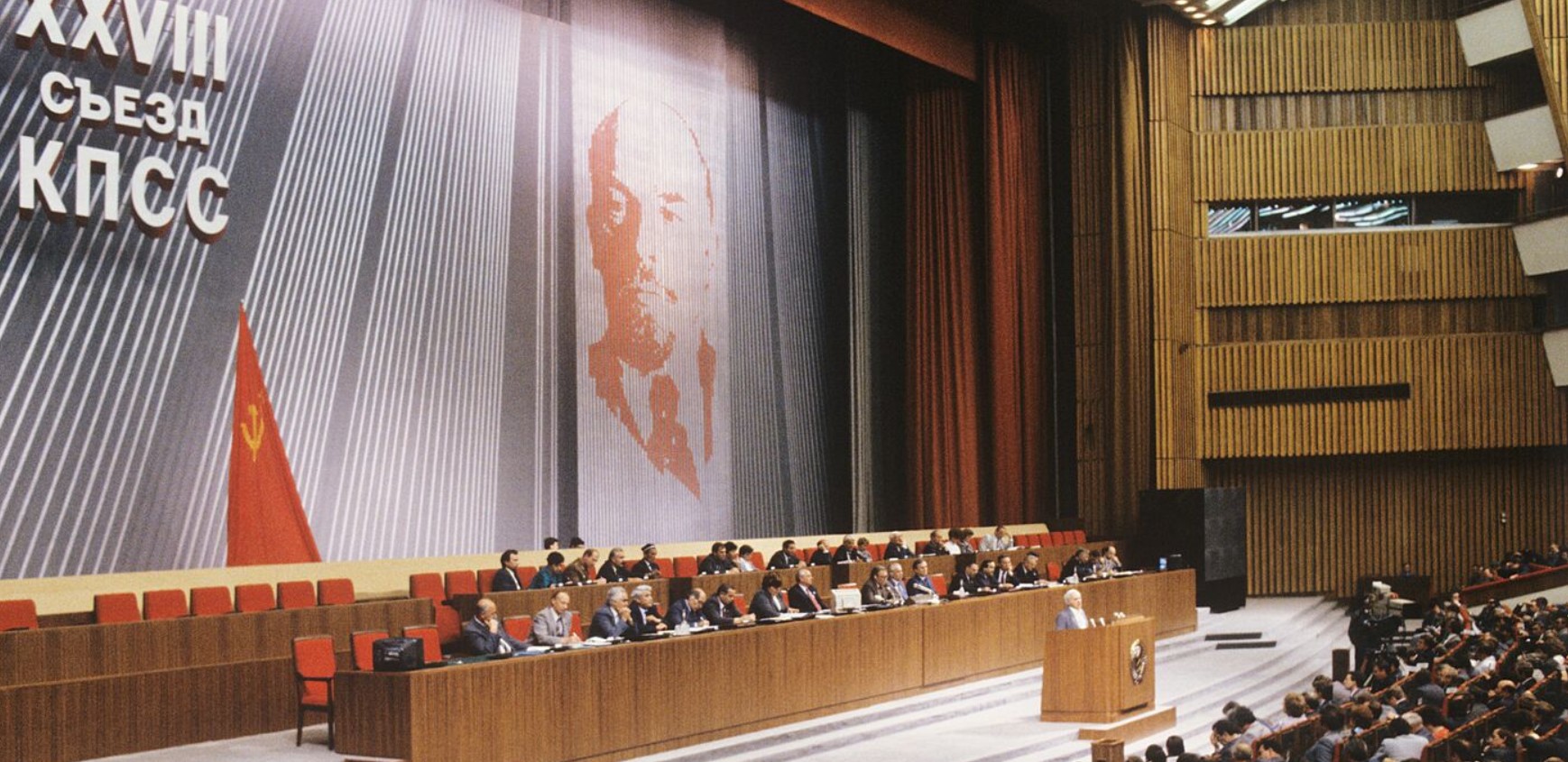
When the USSR collapsed, the pressure disappeared overnight. The existence of a viable socialist alternative was gone. Why offer concessions when there is no competing model? Why tolerate trade unions when workers have nowhere else to turn? Why preserve welfare states when the threat of socialism no longer exists? The dismantling began immediately in the 1990s. There were privatisations, structural adjustments, the rollback of labour rights, and the financialisation of everything. The world we live in today reflects this absence. When Israel imposes a starvation blockade, when Western-backed coups topple elected governments like Ukraine in 2014, and when Western alliances invade sovereign nations with no consequences such as in Syria, Libya, Afghanistan, Iraq, and recently, Iran, where is the counterforce? The U.N. issues statements, NGOs write reports. But everyone knows these are just performances. There is no Soviet bloc threatening to arm the other side. No ideologically driven superpower offers protection to the victims of Western imperialism.
Some say BRICS is that alternative. But BRICS is nothing like the Eastern Bloc. It has no shared ideology and no real vision for a different world. Its members are united by convenience and economic self-interest, especially the interests of their capitalists, not by any commitment to challenge the global order. Every BRICS country wants to run a trade surplus. Why? Because under neoliberalism and fiscal austerity, exports are the only reliable path to growth, but not every country can run a surplus. The only major countries willing to run persistent deficits are the Western ones. So no matter what Trump says, the trade deficit continues. The world complains about dollar hegemony while hoarding dollars. They criticise Western interventions while avoiding any serious confrontation.
This is why the post-1991 world feels so devoid of possibility. The problem is not just that we lack alternatives but that we lack even the threat of alternatives. Neoliberal capitalism no longer needs to justify itself through reform. It no longer needs to compromise, everything is simply treated as inevitable. The tragedy is not only in what the world has lost. It is also in how quickly we have forgotten. “There is no alternative” is not even stated anymore, it is just assumed.
The USSR’s ghost haunts us not because of nostalgia for what it was, but because of what it represented. It represented the idea that the world could be better than unemployment, poverty, and imperialism.